Monday, June 29, 2020

The Temple of the Sun


Magnificent ruins of the Temple of Bel in modern Syria

Midsummer is the domain both of the Golden Castle, and the Golden Temple. Today I heard of a place which I had known about a little, ravaged in time, but still true in the otherworld. The Temple of Bel dominated the city of Palmyra in Classical Syria for centuries and even the centuries of neglect and rule by Arabs and then Ottomans did not destroy it. The Temple of Bel was bombed by ISIS a few years ago, but its ruins remain impressive. It was the home of Malak-bel and he was revered at the head of the trinity of his brothers, Aglibol and Yarhibol together symbolizing the Sun, the Moon and the all encompassing Sky. This Bel is none of other than the Ba'al of the Bible, or rather, Bel means the same thing as Ba'al. Sunday school taught us that good Israelites worshiped the right God and bad Canaanites worshiped Ba'al. The Israelites destroyed Ba'al's altars and that was the end of him.

Reconstruction of the Temple of Bel 

But this neat telling was never true. Ba'al, meaning Lord was the word all Levantine people used for the high god. Later Hebrews would stop using it for God, but even now in Hebrew the word is still kept to denote a husband or any other master. The Israelites, on their way to become Jews would call their God Lord, but use another form of it, the name Adonai, another form of Damuzi, Tammuz and yes, the Greek Adonis. Adonis was, in convoluted Greek stories, the lover of the Goddess Aphrodite. In those later stories he is a silly youth who was supposed to be the lover of the Goddess of Death,  Persephone.  To those who wonder about that and say, wait, wasn't Persephone kidnapped by Hades? it should be pointed out that Hades was not the proper name of that God. Though it is almost never used in myths, the name of the Greek God of the underworld was.... yes, Aidoneus.


The Temple of Bel and its Outer Court in ancient Palmyra

So Adonai has had a strange journey from lover of the Goddess of Death to the God of the Bible, but Ba'al had a similar and profound journey we can see right here in his golden temple. Here he is, worshiped in Roman and early Christian Syria and a magnificent temple and here were learn that there were, in fact, three Ba'als. The word Ba'al would become, a little further north, Bel.   Notice that Aglibol and Yarhibol are also just: Agli Ba'al and Yarhi Ba'al, so in Palmyra they revered a trinity of Lords.  What the Hebrew Bible dreamed of doing, destroying the altars that view God in the way they hated, it took the fire power of ISIS to execute on a large scale.


The Trinity of Palmyra, Melekbel, Aglibol and Yarhibol


Melek Bel the Golden God of Palmyra, Classical Roman Bas Relief

Sunday, June 28, 2020

Second Sunday in Extraordinary Time, Sunday of the Divine Beloveds


There have been several pairs of beloveds in religious history. Religious history is a term which souns more accurate than mythology, and I'm going to stick with it for now. But when I think of the divide lovers, it is Radha and Krishna, so very united that they are often called the singular entity Radhakrishna,who come to mind. Krishna is the greatest and ultimate form of Vishnu. He is Jesus in the Gospel of John declaring "The Father and I are One." But on the earth he finds his mortal lover, his other self, the one to whom he always making love, wooing with his flute, the lady who always dances with him, Radha. Often they are pictured, boating together, on swings together, in great enjoyment of each other. He is hers and she is is, choicest of the beloveds. Krishna has wives and he loves them, but Radha is his chiefest love and though she is married to another, Krishna is hers. Their love is not agape. Their love is not chaste. It is not the equal Christian love of God for all. It is a most specific love. It is a liking, a mutual attraction not often spoken of in most western traditions. In the West if Catholicism that speaks of God having specific love for some, but this love usually entails much suffering and little pleasure let alone the idea of "like". The love between Krishna and Radha is full of pleasure and passion.

What is more, when Krishna loves this mortal woman, something is revealed. Whenever Vishnu comes to earth in whatever forms, he is always joined by his other side, Lakshmi. When he is Varaha the Boar, she is Varajahi the She Boar, when he is Ram she is Sita. And we understand that Radha is the highest form of Lakshmi. Zeus loves Europa, but she is simply Europa. Aphrodite loves Adonis, but they are both gods. The love of Krishna for Radha recognizes in her his own divinity, her forgotten deepest self, her true divine self. This love is Communion and not spectator worship. Being loved by the Beloved God makes the Beloved God as well. The two are One, and so we celebrate the Divine Beloved and the hard to grasp truth that if the Beloved is not in us, he is not anywhere, and if we have not discovered in our love of God, the divinity in our own hands, we have not discovered anything worth knowing. 

The Nativity of Saint John the Baptist


The 24th of June is the Nativity of Saint John. Only he and the Virgin Mary, aside from Jesus, have Solemn Nativities. This alone testifies to his important in the Churches from the very beginning. Praise to the saint who was forerunner and twin to the Lord, who brought to us the sacred rite of baptism which replaced blood and circumcision. Saint Paul later attempted to eclipse him saying that he brought baptism of the Spirit, but others said they gave the baptism of John and those who still remember John remember this is the only baptism there ever was, for John the Baptist did indeed baptize with water and the Spirit. It was under his ministrations that Jesus himself was baptized. Still words fail where poetry, the foundation of all language, does not.


on the birth of wild things

Today in the sauce thick heat you gave birth,
though
you were ancient past bearing, a
withered land
with no water, all rocks and stones
and you were cousin of the Virgin
twice virgined over, three times as old
you brought into this earth the prophet
all covered in moss
all wild eyed and full of locust
and honey
and his lungs screamed prepare the way
and his foot thumped out to herald
resurrection
and out of the protection of that
which once was
barren, all covered in vines and
tendrils he came
the Greenest of Men, who carried
his own head in his hands
and in his mouth, the sword of
his own destruction
and when you see him at the Jordan
then he is our destruction
when you see him calling you into
the water
then he is your induction to the
little death
the fire death and the water death
and the death of all that held you
and when he comes, calling,
behold the Lamb
then you know he is the Wild Thing
and you are the Wild Thing
and what he brings in his camel
hair coat
is the end of all stale safety

ii.

in the place where noes turn into yeses
i love you
in the place where they become the caresses
of miracle
i love you
in the hill country--get thee up
where he is born--with a high voice
kicking and screaming
proclaiming, dreaming
where was born that ancient thing
where from the mother whirlwind is
born the woodland King,
the desert king
the wooded king
this is the way he comes to world
after whirring away in a chariot of flame
and in the fire of this wholly joyous
desire
i declare
i love you
at the river jordan
where he pours
new saving for a newer lord
i love you wildly
i love you with his roaring voice
and his crazy fire
i adore you
i implore you
i... am in awe of you
i love you


strophe

deep inside i know you will always return to me...

in the blankets and sheets between
night and morning
where timelessness floats we stripped
and your body, with all its black hairs
was on top of me and beside me and all
over
how do you know?
and what can you say?


the sweetest release is the admission of love


iii

from the wall the mossy head of John the Baptist
half pan and three fourths devil leers down at me and
says, you ought to know by now there is no safety in love
i was born when Herod chopped off my head
that was the death of a wild thing
and with tendrils like rings and roots like
claws my body went down and down, twisting through the earth
and i picked my head up and laughed
you better laugh too
when Salome's axe comes for you
and this is the kiss of wild things
a fire on your face
and this is the love of wild things
a burning embrace
and this is the baptism of wild things
wind and fire
and this is the birth of wild things
and you are the wild thing whenever you let
my arms, like corded wood seize you
and dunk you and dunk you
until drunk with the jordan you gasp and reel
and start over again, laughing with beginning
this is repentance
this is all it ever was

First Sunday in Extraordinary Time: Sunday of the Devoted Heart


Following Sacred Heart, last Sunday and all of last week was dedicated to the mystery of the devoted heart, the heart that carries the Beloved One inside of it. Beloved one is such a special title. Sometimes God and the word God fall so short,and saying things like The Divine and the Supreme are not enough. The Beloved is met not by worshipper or child or even partner, but by Lover, and often is Lover. Beloved and Lover is the first relationship in which the devotee and the object of Devotion may exchange places, and the representation for this which seemed most appropriate to use was Sri Hanuman, bearing in his heart Rama and Sita.


Sunday, June 21, 2020

Beavi and the Healing Solstice


Firstly, I’ve already written here several times in the last week and certainly hadn’t planned to do so today. I think in the last week I’ve written more articles than I wrote in all of June last year, and to think, when the year mark for this page was coming, I believed I was done with it. I don’t really know that anyone actually reads it, and that’s sort of OK. Part of my devotion and my Work was to keep an ongoing journal to make sense of my practice for all who needed it or would come after me. AFW had kept their page so brilliantly, I felt duty bound to keep mine and not have a Craft that was un thought out or unexplained or unexplored, and so that obligates me to do certain things, like write a shit ton of articles when so many special days happen so thick and so fast. Another problem with this time of year is that these days are all what you would call “moveable feasts” in the old Catholic sense, that is Solstices and Holy Days do not necessarily take place on the same date so they don’t always come in the same order. They just happen around each other, so I cannot say that Extraordinary Time exactly begins with Body and Blood Sunday, and I cannot say it exactly begins with today, which is Solstice, which is what we are discussing.
           
As I was getting up to clean and coming to the laptop to write this, I thought, this is the time of the Golden Lantern and the Golden Castle. For anyone who has followed this page, you will note here a change. So much of my iconography I took from AFW, but when it became my own it had to fit my reality. It had to change. And even my own iconography had to change as it settled into itself. The Golden Castle, which stands in the northeast at Candlemas makes little sense ot me there. It seems that at the beginning of spring it is the Stone Castle for me, and it is only now that I have begun using the Golden Lantern again, so now I know its time for the Golden Castle, and for Golden Lady, Beavi.

There is a half done sculpture of a woman in a flame colored dress. I began making her today and didn’t even think about this being the Solstice. Somehow this unfinished woman has something to say to me. I went to bed with teeth unbrushed and dirty dishes in the sink. I am getting up at five thirty in the morning to grey light and the name Beavi is on my lips. She is the Finnish Goddess of the Sun the Sami offer butter and white animals to in the winter. She is the mother of the shamans who prefigure Santa Claus and she and they bring the gifts of sanity and healing in the darkness of winter. But the thing we have always known is summer, with its great heat, and its drying grass carries its own need for sanity, and this is a time for Beavi more than ever. Perhaps the reason the Solstice is not revered like other holy days is because we want to pretend that this is the time when life is the happiest and all we need is the beach and water even while so many of us cannot easily get to the water and the heat of the sun drives us indoors.

But for those of us who can make it to the sand and the water and the healing of summer it is good to remember this healing is not an entirely secular one, That is why I am not going to call Solstice Litha. That always bothered me. I don’t know what the hell a Litha is anyway. To me this time is Sol or Beavi and I remember the Woman fo the Sun and ask for her blessing. We need it so badly. Look upon us in our madness, in our sadness, in our poverty, in the wealthy we do not yet understand or appreciate, in our need to change. Shed the light of your grace and sanity upon us, o lady.

The summer has always been a strange time of transition. I went from years of school to years of teaching in school, so summer has always been the time of rest and no work, but that’s also made it a time of watching money or watching there be no money. I’m so used to the poverty that even when I’m not impoverished I have a hard time believing it. Summer was the time of desire, when I wanted to travel but usually couldn’t, when I wanted to get to he beach, but couldn’t find a way, when I wanted to be cool, but could not get out of the heat. It was the time when I failed a load of high school courses and spent the entirety of summer school, an experience that was strangely joyful at the same time it was a bit of a punishment. It’s always been a liminal and bittersweet time, and it is a time of memory. Summer is the time of some of my keenest joys an also the sharpest sadness. It was the heat of July that I first spent a series of days dedicating myself to the Craft, took a bath, donned a black robe and turned by back on normal life. It was the first time I wen to Michigan City and came into contact with the sadnesses and poverty of so many people and began writing my cycle of poems dedicated to an old lover now in prison, who had become my lover, yes, in a summer time.  It is not that I remember friends who, far from living it up, are homeless, or in jail, depressed, afraid,, bedeviled by madness, truly in need of Beavi.


Friday, June 19, 2020

Extraordinary Time


At the beginning of this week, I went on the long trip to the water to make my offerings and usher in Extraordinary Time, the end of the Christian time and the beginning of the witch’s season. On the water I sat there and admitted that I was scared, that I was niggled by little worries and could not relax into the joy that the water brings. And the clear water and the sand and pebbles did bring joy. The water spoke of eternity. I traced the sigils on the sand of the Workings I had done, and watched the waves take them back. I ran along the water looking for the gift the waves had for me, and took up a double pronged wand that was as dark as the straight bleached one the water gave me the year before. I don’t know how to do this new magic, but I don’t have to know. Soon I will be taught, if I can shut the silly parts of myself up long enough to listen.

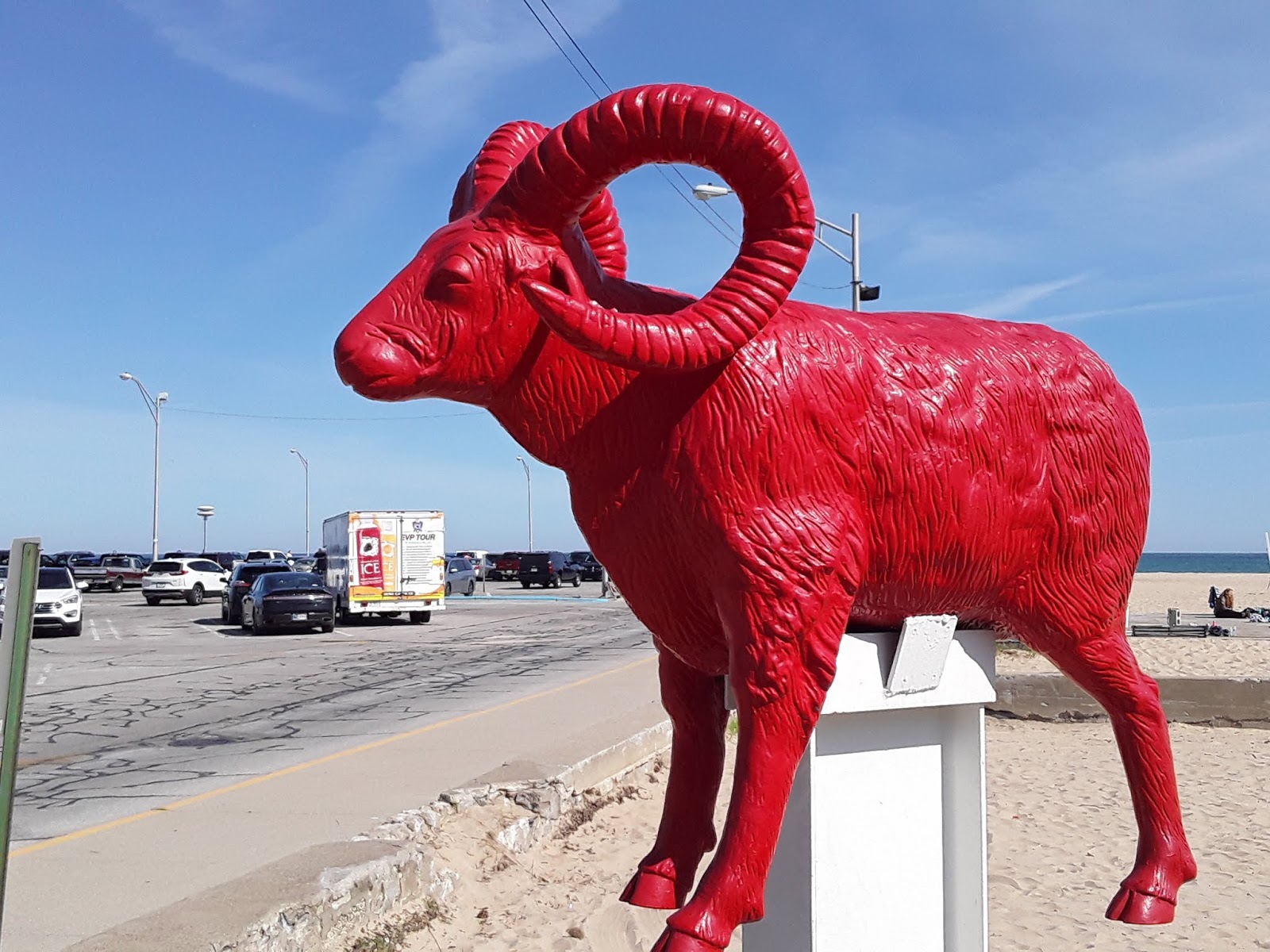
The old way and everything that occurred last year is a model, but only a model for what is about to come. Now we are doing a new thing. Part of me is the Fool Card. I strive to be the spiritual traveler who expects good things, but the other part of me is often dizzied by fears. I see monsters where they are not. Sometimes I see them where they were before. I haven’t quite come out of the war zone. There is still a little trauma. This time around I have a working camera that can take the image of the Red Ram and remind me Khnum is the master of formations, the Lord and Master of Arts. Before they called the goat Devil or Baphomet or Bucca even, he was Khnum and he still is.


Extraordinary Time. It was the word I coined because the liturgical year ends in churches and when they settle down to doing the same thing over and over it is called Ordinary Time. Recently I’ve learned that another word for the long form Latin Mass is Extraordinary Mass. That is to say, the regular mass I grew up with in English is ordinary, but the much longer, more ornate mass in Latin, which all Catholic churches used before 1963, the one where congregants are usually dressed, the women veiled, where the chanted service takes far longer than anything we know now, is called the Extraordinary form. The extraordinary form is the old form and the form taking its time, the form that is always in celebration, that rather than moving into the speed of modernity, goes deeper into what was lost. What is more, this is the form that more and more Catholics are reverting too. I will not. That is the way to characterize Extraordinary Time. It demands beauty. It demands depth of dedication and worship. It goes back and back and seeks to retrieve what was lost. It seeks to maintain beauty and wonder in devotion.

But then, at this very moment we are in truth, in an extraordinary time. Things are quite really nailbiting. We don’t know how to make sense of what’s going on and there is the feeling that this is because there is, in fact, no sense. The old Christian woman in her rocking chair knowingly saying “God has a plan,” seems to be about wishful thinking. But then that was always true.  As we proceed into Extraordinary Time, I do not understand the rhythm and don’t quite get the language. It reminds me, in fact, of the first time I went to an Extraordinary Mass (and didn’t stay). Where I thought I would get it, thought it would be just like regular church, but in another language, and did not know the entire form was different, that there were no opening hymns, that psalms were where opening prayers would be. I didn’t even know they were psalms because they were in Latin. There were only a few things I could catch onto, and in the end it was best to let those go too. I think this may be the first rule of Extraordinary Time as well.


Union: The Feast of the Sacred Heart


As the liturgical year wraps up and the churches go into what they called Ordinary Time, the witch goes into Extraordinary Time. But as Ordinary Time comes and the season of Easter ends, we come to Trinity and Pentecost, the season overlapping Easter and the Ordinary. We have seen Ascension, followed by Pentecost or Whitsunday and then followed by Trinity and next Corpus Christi, and finally, at the very in of Trinity Time, and at the dawning of Extraordinary, we arrive at the Feast of the the Sacred Heart. It is only now that I am beginning to see that these separate holidays are not desperate attempts to keep liturgy going, but an ongoing celebration of the relationship between the devotee and the Lord, between the lover and the Beloved.

Ascension was where Jesus, the single, fleshly, incarnated God, living in a particular time and place and a particular body left this world. Jesus who came from God returns to God and in seeing this we remember that we have come from God and will return to him as well.  Pentecost, the coming of the Holy Spirit is the new relationship the lovers have with the Beloved when he is gone in the flesh and present in all of them through his powerful Spirit. Trinity tells us about the relation of God to God and celebrates the great multiplicity of the Divine, Father, Son, Holy Spirit. Corpus Christi reflects this on earth, God present as Bread, Wine and People, The people offer bread and wine and all they have, their flesh and spirits, and in return God offers God. The communion is not only the people with each other, but the above with the below. This feast of bread and wine is really a reiteration of Pentecost, for it is a spiritual feast. Christ *becomes among us in the most common of things. There is no Eucharist and no real presence in the bread and wine without Pentecost. The Catholic preoccupation with the bread and wine being the actual skin, meat and blood of Jesus fails to understand that no one’s flesh and blood is very helpful if we eat it unless it is spiritual. And such flesh and blood serves us no good as devotees unless we are spiritual as well.

The entire mystery of the Holy Grail revolves around this. The chalice and dish which cannot properly be seen but which is the grace of God, which gives all good things and is the abundance of God, which is born by the veiled Grail Maid, the lady of wisdom who is Sapientia, who is Mary Magdalene, who is the Blessed Virgin, the High Priestess, the right minded soul. The Grail Story tells us that Body and Blood and Pentecost are the same as is Ascension where Jesus breaths the Spirit upon his people and then departs in the flesh.


So now we come to Sacred Heart, which is the celebration of the burning heart of Jesus and his endless love for the world. The original patron of this day was Saint Lutgarde of Aywieres who asked for insight and wisdom from Jesus and was given it, but found it not enough and so asked for the heart of Jesus. Jesus replied that he in turn wished to have her heart. He placed his heart in her and placed her heart inside of his own. Here is the conclusion of all these feasts. It is not enough to worship, but to be devoted and not enough to be devoted but to be in love, that is to exist in love. It is not enough to merely wish to look upon God, but to enter into God, not to think of God, but to love God, and not to love God, but to love with the very heart of the Beloved. What we first saw at Ascension is complete. The riddle is now explained. Jesus breathes upon his disciples and departs, but the Breath is the Spirit, but the gift of the Spirit is not only breath. The gift is total, it is all of Him, Body and Blood. And such a gift is not complete until our Body and Blood is the Body and Blood of the Beloved. As Jung says in the Red Book, it is not enough to be Christian, one must become Christ. We not only look at the sea, but are like fish in the sea and not only like fish in the sea, but the drops of water in the sea, the Spirit, the Body, the Blood, the Holy Heart not only  being that in which we live and move and have our being, but our very being. This much is celebrated in Corpus Christi where we learn the Beloved is everywhere and concludes in Sacred Heart where we love the Beloved everywhere because that endless sea is his heart, and his heart is our heart and words and explanations must not fall into silence while love is all that remains.

Last two images: Sri Hanuman bearing the Sri Ram and Sita in his sacred heart.


*becomes: this was originally a typo, but it seemed right because in Eucharist Christ does not simply come, he becomes. This specific statement applies to all housles and communions where, in any name the Holy God is called, which is why he is often called The Holy Child.